
 Book Appointment
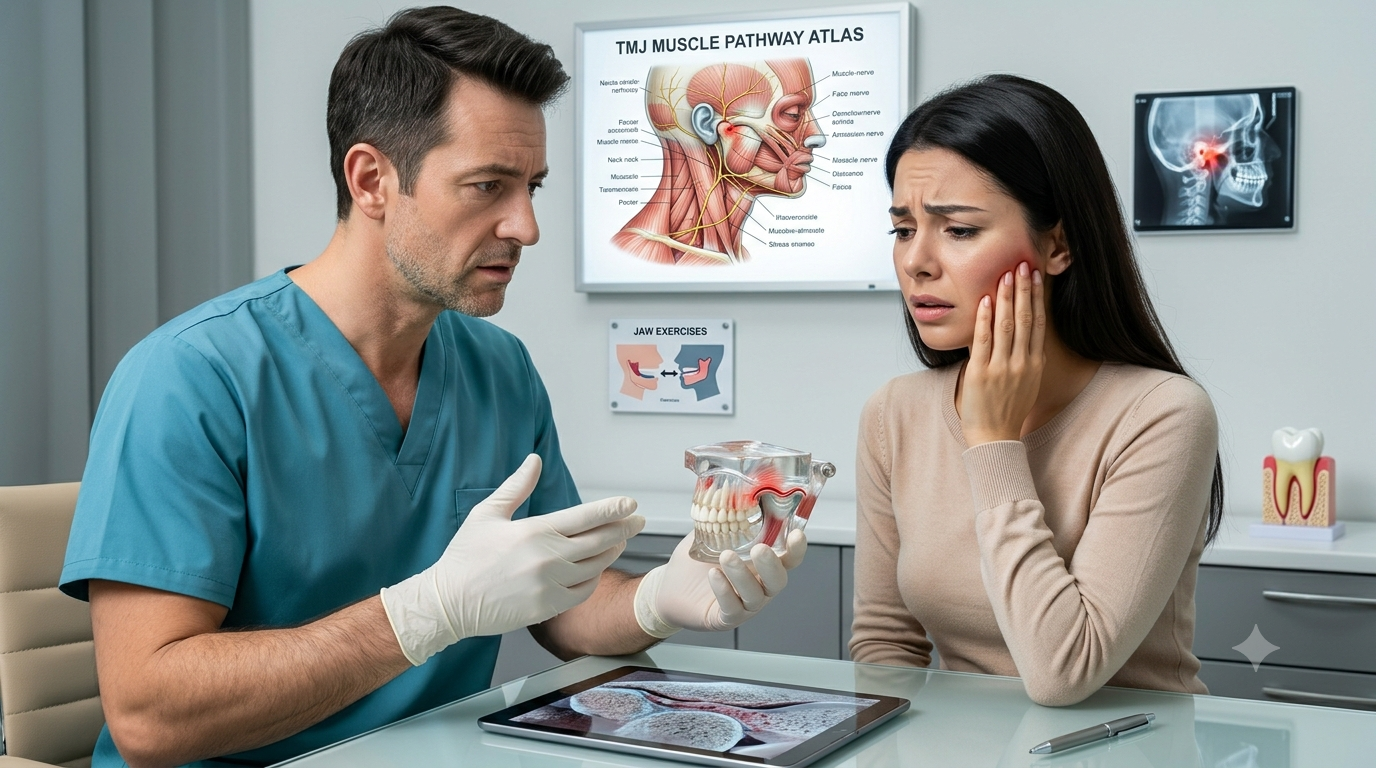
Have you ever tried to open your mouth only to find that your jaw feels stuck, stiff or difficult to move? Sometimes, the jaw may get temporarily locked while yawning, chewing or speaking. For some people, this happens occasionally, while others experience repeated episodes that interfere with everyday activities.
Jaw locking is not just an uncomfortable experience. It can be a sign of an underlying problem involving the temporomandibular joint (TMJ), the joint that connects your lower jaw to your skull.
Understanding why jaw locking happens, recognising its warning signs and seeking timely dental care can help prevent further discomfort and complications.
What Is Jaw Locking?
Jaw locking occurs when the movement of the lower jaw becomes restricted, making it difficult to open or close the mouth normally.
It is commonly associated with temporomandibular disorders (TMD), which affect the jaw joint and the surrounding muscles.
There are two common types:
- Closed lock: The mouth cannot open fully because jaw movement is restricted. This may happen when the cushioning disc inside the joint becomes displaced and interferes with movement.
- Open lock: The jaw gets stuck in an open position, often after yawning or opening the mouth too widely. This can happen when the jaw joint becomes temporarily dislocated.
Both conditions can cause discomfort and may require professional evaluation.
What Causes the Jaw to Lock?
Jaw locking can develop due to several factors. Some affect the joint itself, while others involve the surrounding muscles.
1. Temporomandibular Joint Disorders (TMD)
One of the most common causes of jaw locking is a temporomandibular disorder.
The TMJ contains a small cushioning disc that helps the jaw move smoothly. If this disc shifts out of its normal position or the joint becomes inflamed, jaw movement may become restricted.
People with TMD may also experience clicking sounds, tenderness around the jaw and difficulty chewing.
2. Teeth Grinding and Clenching
Habitual teeth grinding, also known as bruxism, places excessive pressure on the jaw muscles and joints.
Over time, this repeated strain can cause muscle fatigue, soreness and stiffness. In some cases, it may contribute to restricted jaw movement.
Grinding often happens during sleep, so people may notice symptoms such as morning jaw pain, headaches or tooth sensitivity rather than the grinding itself.
3. Jaw Injury or Trauma
An injury to the face or jaw can damage the joint, surrounding muscles or supporting tissues.
Accidents, sports injuries or direct impact may cause swelling, inflammation and restricted movement. Depending on the severity, trauma can also lead to joint dislocation or changes in how the jaw functions.
4. Arthritis in the Jaw Joint
Just like other joints in the body, the temporomandibular joint can be affected by arthritis.
Osteoarthritis can gradually wear down the joint’s cartilage, while inflammatory conditions such as rheumatoid arthritis can cause swelling and inflammation.
These changes may lead to stiffness, pain and difficulty opening or closing the mouth.
5. Excessive Jaw Movement
Repeatedly opening the mouth too wide can sometimes trigger jaw locking.
This may happen during prolonged dental appointments, large yawns or biting into oversized foods. People with an existing jaw joint problem may be more vulnerable to these episodes.
Common Symptoms That Accompany Jaw Locking
Jaw locking may occur alongside other symptoms that indicate an issue with the joint or surrounding muscles.
Watch out for:
- Difficulty opening or closing the mouth completely.
- Clicking, popping or grinding sounds while moving the jaw.
- Pain or tenderness near the ears and jawline.
- Discomfort while chewing or speaking.
- Frequent headaches or facial muscle soreness.
- A feeling that the jaw is shifting or getting stuck.
- Changes in how the upper and lower teeth meet.
These symptoms may vary depending on the underlying cause and severity of the condition.
How Is Jaw Locking Diagnosed?
A dentist will typically begin by discussing your symptoms, medical history and how frequently the locking occurs.
The examination may include:
- Checking how widely the mouth opens.
- Assessing jaw movement and alignment.
- Examining the jaw muscles for tenderness.
- Listening for clicking or popping sounds.
- Evaluating your bite and signs of teeth grinding.
If necessary, imaging such as X-rays, CT scans or MRI may be recommended to assess the joint, surrounding bone structures or the position of the cushioning disc.
What Treatments Can Help With Jaw Locking?
Treatment depends on the underlying cause and how severely the jaw movement is affected.
Some commonly recommended approaches include:
- Jaw Rest: Avoiding hard, chewy or oversized foods can reduce strain on the joint. Eating softer foods temporarily may help.
- Warm or Cold Compresses: Applying a warm compress may relax tight muscles, while cold compresses can help manage discomfort and swelling.
- Jaw Exercises: Gentle, professionally recommended exercises may help improve movement and reduce muscle tension.
- Night Guards: If teeth grinding or clenching contributes to the problem, a custom-fitted oral appliance may help protect the teeth and reduce pressure.
- Medication: Depending on the diagnosis, a healthcare professional may recommend medication to manage pain or inflammation.
- Further Treatment: Persistent or severe cases may require specialist evaluation and additional procedures. Treatment should be based on the specific joint problem rather than symptoms alone.
If your jaw suddenly becomes stuck in an open position or you cannot close your mouth, seek urgent medical or dental attention. Do not try to force it back into position.
When Should You See a Dentist?
Occasional clicking without pain may not always indicate a serious problem. However, repeated jaw locking, persistent discomfort or difficulty opening your mouth should never be ignored.
Early evaluation can help identify whether the problem is related to the jaw joint, muscle tension, arthritis or another underlying condition.
Avoid forcing your jaw open or repeatedly trying to make it click, as this may aggravate the problem.
Give Your Jaw the Attention It Needs
Your jaw plays an important role in everyday activities, from speaking and eating to yawning and smiling. When its movement becomes restricted, even simple tasks can become uncomfortable.
Understanding the causes of jaw locking and recognising the early warning signs can help you seek the right care before the condition worsens.
A comfortable jaw is an important part of a healthy smile. If you experience repeated locking, clicking with pain or difficulty moving your jaw, schedule a dental evaluation to understand the cause and explore suitable treatment options.