 Book Appointment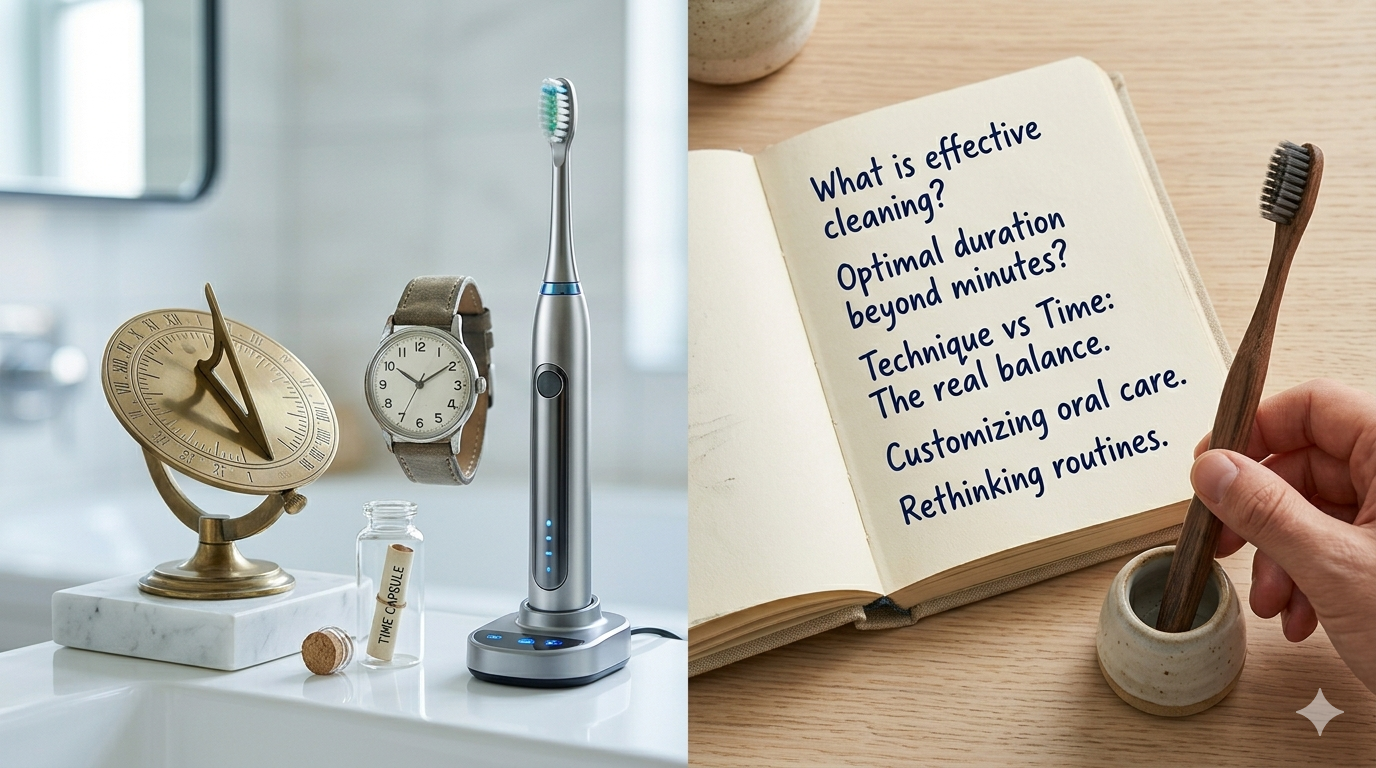
For years, we’ve all heard the same advice: brush your teeth for two minutes, twice a day. It’s printed on toothpaste boxes, repeated by dentists, and drilled into us since childhood.
But here’s the truth dentists are now discussing more openly:
the “2-minute rule” is often outdated—or at least incomplete.
Because brushing for two minutes doesn’t automatically mean you’re cleaning your teeth properly. In fact, many people brush for the “right” amount of time and still end up with cavities, gum inflammation, plaque buildup, and bad breath.
So how long should you actually brush? And what matters more: time or technique?
Let’s break it down.
Why the 2-Minute Rule Became the Standard
The two-minute guideline was created as a simple, easy-to-remember rule for the public. It’s not wrong—but it was designed for an ideal situation where someone is brushing correctly, covering all surfaces, and using proper technique.
Unfortunately, real-life brushing is rarely that perfect.
Many people spend two minutes brushing only the front teeth, rushing through molars, skipping gumlines, and missing the back surfaces entirely.
So while two minutes is a good baseline, it’s not always enough.
What Dentists Say Matters More Than Time
Dentists don’t just look at your brushing time—they look at the results:
- plaque buildup
- gum inflammation
- early cavities
- staining
- bad breath
- gum recession
If these issues are present, your brushing routine isn’t working, even if you’re brushing for two minutes.
Proper brushing is about coverage, technique, and consistency—not just the clock.
So How Long Should You Actually Brush?
For most people, the ideal brushing time is:
2 to 4 minutes
Yes, that’s a range—and it depends on your mouth and habits.
Here’s a simple way to understand it:
- 2 minutes is a minimum for basic cleaning
- 3 minutes is better for most adults
- 4 minutes may be needed for people with braces, gum disease, or heavy plaque buildup
If you’re brushing quickly and aggressively for 2 minutes, you may still be missing areas. On the other hand, brushing gently and thoroughly for 3 minutes often gives better results.
Why Many People Need More Than 2 Minutes
- You’re Not Cleaning Every Tooth Surface
Each tooth has multiple surfaces:
- front
- back
- chewing surface
- gumline area
Most people focus on what they can see in the mirror and forget the backs of the teeth—especially the molars.
Cleaning everything properly takes time.
- Plaque Builds Up in Hard-to-Reach Areas
Plaque tends to build up most around:
- back molars
- gumline
- between teeth
- behind lower front teeth
These areas require slower, focused brushing. A rushed two-minute brush often doesn’t reach them well.
- Electric Toothbrushes Are More Effective—But Still Need Time
Electric toothbrushes can clean better than manual brushes, but they still need proper time and positioning.
If you’re moving too quickly across your teeth, even an electric toothbrush won’t work properly.
The Best Brushing Method (Dentist-Recommended)
Instead of counting minutes only, dentists recommend brushing in sections.
The Quadrant Method
Divide your mouth into 4 sections:
- Upper right
- Upper left
- Lower right
- Lower left
Spend 30 seconds per quadrant as a minimum.
That automatically equals 2 minutes.
But if you want more thorough cleaning, spend 45 seconds per quadrant, which gives you 3 minutes total—a much more effective routine for most adults.
The Biggest Mistake: Brushing Too Hard
Some people brush longer thinking it’s better, but brushing aggressively can cause damage.
Brushing too hard can lead to:
- enamel wear
- gum recession
- tooth sensitivity
- irritated gums
So the goal isn’t just brushing longer—it’s brushing smarter.
Gentle pressure + correct angle + enough time = healthier teeth.
What About Brushing After Meals?
Many people brush immediately after eating, especially after coffee or citrus foods. But this can actually harm enamel.
Acidic foods soften enamel temporarily, and brushing too soon can wear it down.
Best practice:
Wait 30 minutes after eating before brushing.
If you need to freshen up sooner, rinse with water or chew sugar-free gum.
How to Know If You’re Brushing Long Enough
Here are signs your brushing time (or technique) may not be enough:
- gums bleed when you brush or floss
- bad breath returns quickly
- plaque buildup near gumline
- frequent cavities
- stains around molars
- dentist says you have gingivitis
If these happen, increasing your brushing time to 3 minutes and improving technique can make a big difference.
The Ideal Brushing Routine (What Dentists Recommend)
For best results, follow this routine:
- Brush twice a day
- Brush for 2–3 minutes minimum
- Use a soft-bristled toothbrush
- Angle brush 45 degrees toward the gumline
- Don’t forget the back of your teeth
- Brush your tongue gently
- Floss once a day
If you have braces, gum disease, or frequent cavities, brushing closer to 3–4 minutes is often more effective.
Final Answer: How Long Should You Brush?
The two-minute rule isn’t completely wrong—but it’s no longer enough for everyone.
Most adults should aim for 3 minutes of thorough brushing
especially if they:
- snack frequently
- drink coffee often
- have gum inflammation
- have crowded teeth
- are prone to cavities
The best brushing time is the amount of time it takes to clean every tooth surface properly—without rushing.
Because in oral health, quality beats speed every time.
Brushing your teeth is one of the simplest habits you do daily, but it can make or break your dental health. If you’ve been following the 2-minute rule and still dealing with plaque, bad breath, or cavities, it may be time to upgrade your routine.
So yes—two minutes is a starting point.
But if you want a truly clean mouth, healthier gums, and fewer dental problems, aim for 3 minutes with better technique.
Your teeth will thank you.