
 Book Appointment
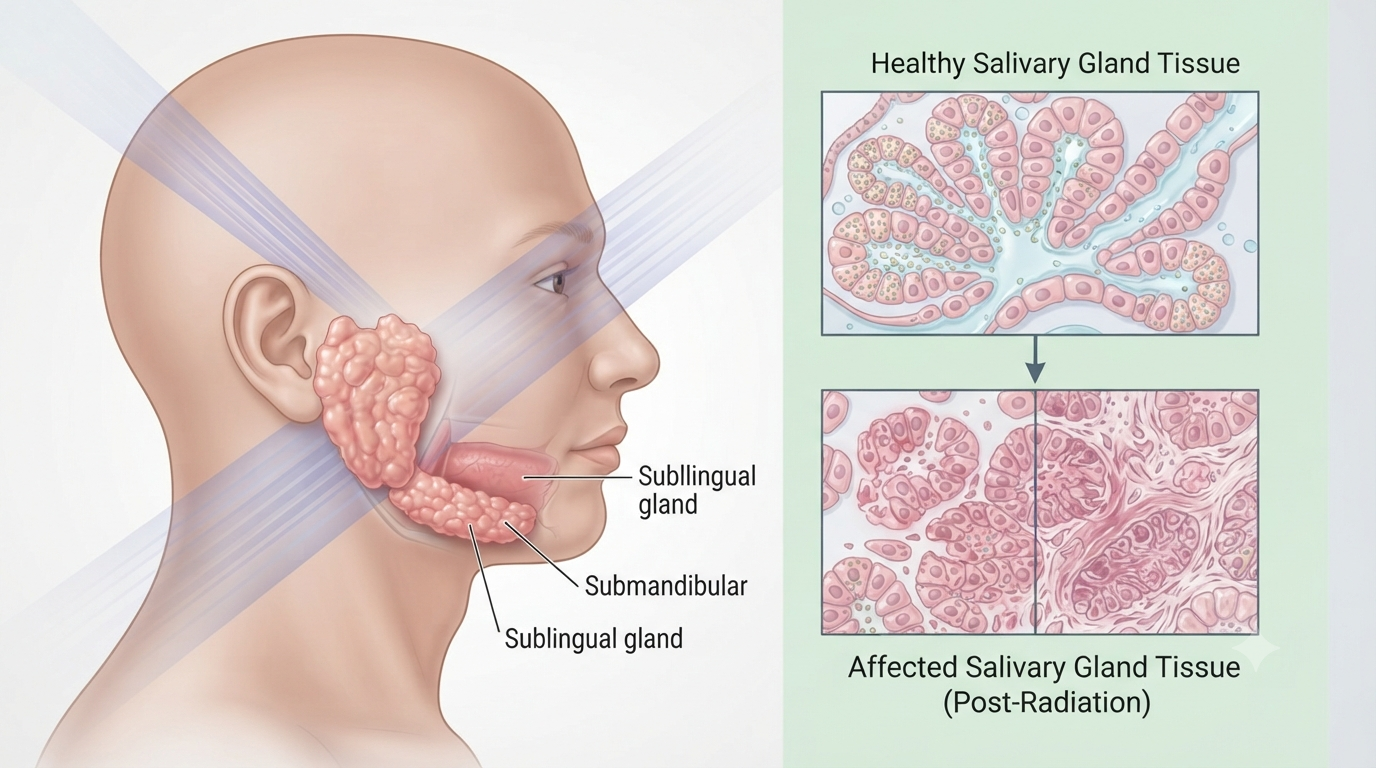
Radiation therapy is an important treatment used to manage several types of cancer, including cancers of the head and neck. While it helps target cancer cells, it can also affect nearby healthy tissues, including the salivary glands.
Saliva plays an essential role in maintaining a healthy mouth. It keeps oral tissues moist, helps break down food, supports swallowing, and protects teeth against decay. When radiation therapy affects the salivary glands, saliva production may decrease, leading to several oral health complications.
For patients undergoing cancer treatment, understanding these changes is important for protecting their teeth, gums, and overall oral comfort.
Let’s explore how radiation therapy affects salivary glands, the dental problems it may cause, and ways to manage these side effects.
What Are Salivary Glands and Why Are They Important?
Salivary glands are structures in and around the mouth that produce saliva. There are three major pairs of salivary glands:
- Parotid Glands: Located near the cheeks and ears, these are the largest salivary glands.
- Submandibular Glands: Located beneath the lower jaw, they produce a significant portion of resting saliva.
- Sublingual Glands: Located beneath the tongue, they produce saliva that helps keep the mouth moist.
Several smaller salivary glands are also present throughout the mouth.
Saliva does much more than keep the mouth wet. It helps:
- Wash away food particles and bacteria.
- Neutralise acids produced by oral bacteria.
- Protect tooth enamel against decay.
- Support chewing, swallowing, and speaking.
- Maintain a healthy balance of microorganisms in the mouth.
- Protect the soft tissues inside the mouth.
When saliva production is reduced, these protective functions become less effective.
How Does Radiation Therapy Affect Salivary Glands?
Radiation therapy directed at the head and neck may expose the salivary glands to radiation, depending on the treatment area and technique.
Salivary gland cells are sensitive to radiation exposure. Damage to these cells and their supporting structures can reduce saliva production and change its composition.
Patients may experience a noticeable reduction in saliva during the early stages of treatment. In some cases, the effects may continue long after radiation therapy is completed.
The extent of damage depends on factors such as:
- The radiation dose received by the salivary glands.
- The location of the treatment area.
- The duration of radiation therapy.
- The amount of healthy gland tissue exposed.
- Whether chemotherapy is given alongside radiation.
Modern radiation techniques, such as intensity-modulated radiation therapy (IMRT), can help limit exposure to healthy tissues, including the salivary glands, when clinically appropriate.
- Dry Mouth (Xerostomia)
One of the most common oral side effects of radiation therapy involving the salivary glands is dry mouth, medically known as xerostomia.
When the glands produce less saliva, patients may experience persistent dryness or a sticky feeling inside the mouth.
Common symptoms include:
- Difficulty swallowing dry foods.
- Frequent thirst.
- A dry or rough tongue.
- Difficulty speaking comfortably.
- Cracked lips.
- A burning sensation in the mouth.
Dry mouth can make everyday activities uncomfortable and may affect appetite, nutrition, and quality of life.
Drinking water regularly, using saliva substitutes, and following your dentist’s recommendations can help manage these symptoms.
- Increased Risk of Tooth Decay
Saliva naturally protects teeth by neutralising acids and helping remove food particles and bacteria.
When radiation therapy reduces saliva production, the teeth lose some of this natural protection.
As a result, patients may develop cavities more quickly than usual. This condition is sometimes called radiation-associated dental caries.
It may affect multiple teeth and can progress rapidly, particularly around the gumline and exposed root surfaces.
To reduce the risk:
- Brush twice daily with fluoride toothpaste.
- Use prescription-strength fluoride products if recommended.
- Limit frequent consumption of sugary foods and drinks.
- Maintain regular dental appointments.
- Follow a preventive dental care plan throughout treatment.
Preventive dental care is particularly important because extensive tooth damage can be difficult to manage when saliva production remains low.
- Oral Infections and Changes in Oral Bacteria
Saliva helps maintain a healthy balance of microorganisms inside the mouth.
When saliva production decreases, the oral environment changes, making it easier for certain microorganisms to multiply.
Patients undergoing radiation therapy may experience an increased risk of oral infections, including oral candidiasis, commonly known as oral thrush.
Signs of oral thrush may include:
- White patches on the tongue or inner cheeks.
- Redness or soreness inside the mouth.
- A burning sensation.
- Changes in taste.
- Discomfort while eating or swallowing.
If you notice these symptoms, consult your dentist or oncology team. Oral infections can usually be managed with appropriate treatment.
- Difficulty Chewing and Swallowing
Reduced saliva can make chewing and swallowing more challenging because food does not move as easily through the mouth.
Radiation therapy may also affect the muscles and tissues involved in swallowing, particularly when the treatment area includes structures in the throat.
Patients may experience:
- Difficulty swallowing dry or solid foods.
- A sensation of food sticking in the mouth or throat.
- Pain while eating.
- Reduced appetite.
- Changes in food preferences.
Soft, moist foods and smaller meals may help improve comfort. However, the oncology team or a swallowing specialist should assess persistent swallowing difficulties.
- Changes in Taste and Oral Sensitivity
Radiation therapy can also affect taste perception, particularly when the treatment involves structures responsible for taste.
Some patients notice that food tastes different, becomes less flavourful, or develops a metallic or bitter taste.
Reduced saliva production may further affect how flavours are experienced.
Additionally, the oral tissues may become sensitive or irritated during treatment.
These changes can affect eating habits and nutritional intake. Discussing persistent taste changes with your healthcare team can help identify ways to manage them.
- Radiation-Related Jaw Complications
In some patients receiving radiation therapy for head and neck cancers, the jawbone may also receive radiation exposure.
One possible complication is osteoradionecrosis, a condition in which irradiated bone loses its ability to heal properly and becomes exposed or damaged.
It most commonly affects the lower jaw and may develop after radiation therapy, sometimes following a tooth extraction or other dental surgery.
Warning signs may include:
- Persistent jaw pain.
- Exposed bone inside the mouth.
- Swelling or infection.
- Difficulty opening the mouth.
- Delayed healing after dental procedures.
Patients who have received radiation to the jaw require careful dental evaluation before invasive procedures.
How Can You Protect Your Oral Health During Radiation Therapy?
Maintaining oral health before, during, and after radiation therapy can help reduce complications and improve comfort.
Here are some important steps to follow:
- Get a Dental Examination Before Treatment: Visit your dentist before starting radiation therapy. Evaluate and manage existing cavities, gum disease, and dental infections when appropriate.
- Maintain Daily Oral Hygiene: Brush gently with a soft-bristled toothbrush and fluoride toothpaste. Clean between your teeth daily if your oral condition allows.
- Keep Your Mouth Moist: Sip water regularly and consider saliva substitutes or moisturising oral products recommended by your healthcare team.
- Use Fluoride Protection: Your dentist may recommend prescription fluoride toothpaste or custom fluoride trays to help protect against radiation-associated tooth decay.
- Avoid Tobacco and Alcohol: These can irritate oral tissues and may worsen dryness and discomfort.
- Choose Suitable Foods: Soft, moist, and nutrient-rich foods may be easier to eat when your mouth feels dry or sensitive.
- Attend Regular Dental Follow-Ups: Continue dental monitoring during and after radiation therapy to identify problems early and manage complications.
Radiation therapy can have a significant impact on salivary glands and oral health, particularly when treatment involves the head and neck.
Reduced saliva production can contribute to dry mouth, increased tooth decay, oral infections, taste changes, and difficulty chewing or swallowing. In some cases, radiation exposure to the jawbone can also lead to complications such as osteoradionecrosis.
However, proper dental care before, during, and after treatment can help reduce many of these risks.
If you are preparing for radiation therapy or experiencing oral discomfort during cancer treatment, consult your dentist and oncology team. A coordinated approach to care can help protect your teeth, manage side effects, and support your overall well-being.