 Book Appointment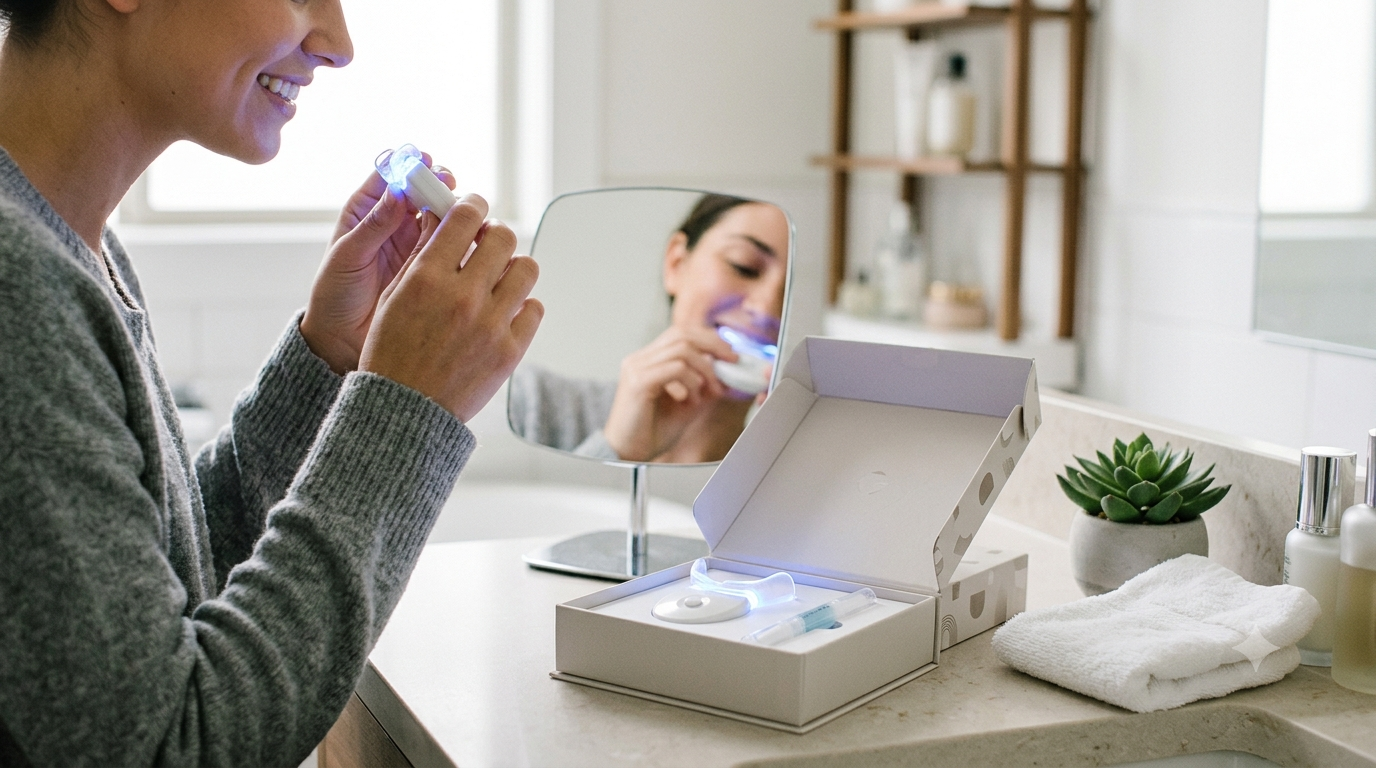
A brighter, whiter smile is one of the most requested cosmetic dental goals, and it’s easy to see why. With social media trends and countless at-home whitening products on the market, LED teeth whitening kits have become increasingly popular. They promise professional-looking results from the comfort of your home, often at a fraction of the cost of in-office treatments.
But do these kits actually work? More importantly, are they worth your time and money?
The answer depends on your expectations, the type of stains you’re trying to remove, and your overall oral health. Here’s what you need to know before investing in an LED teeth whitening kit.
What Are LED Teeth Whitening Kits?
LED teeth whitening kits typically include a whitening gel and a small mouthpiece fitted with LED lights, usually blue in color. After applying the whitening gel to your teeth, you wear the mouthpiece for a set amount of time, following the manufacturer’s instructions.
Many products claim that the LED light enhances the whitening process, helping the gel work more effectively and producing faster results.
While the concept sounds appealing, it’s important to understand how these kits actually work.
Does the LED Light Really Whiten Teeth?
One of the biggest misconceptions is that the LED light itself whitens teeth.
In reality, the whitening gel contains the active ingredients—usually hydrogen peroxide or carbamide peroxide—that break down stains on the surface and within the enamel. The LED light does not bleach your teeth on its own.
Some manufacturers suggest that the light may help activate or accelerate the whitening gel, but research indicates that the light provides little additional whitening benefit compared to the whitening gel alone. The effectiveness of the treatment depends far more on the quality and concentration of the whitening agent than on the LED light.
What Types of Stains Can They Remove?
LED whitening kits generally work best on extrinsic stains, which are stains on the outer surface of the teeth caused by everyday habits such as:
- Coffee
- Tea
- Red wine
- Soft drinks
- Tobacco use
- Certain foods with strong pigments
However, these kits are less effective on intrinsic stains, which occur inside the tooth and may result from aging, trauma, certain medications, or excessive fluoride exposure during tooth development.
For deeper discoloration, professional dental whitening treatments may provide better results.
Pros of LED Teeth Whitening Kits
Many people choose LED whitening kits because they offer several advantages:
- Convenient to use at home
- Less expensive than professional whitening
- Can gradually improve mild surface stains
- Easy to fit into a regular routine
- Widely available online and in stores
For patients with healthy teeth and mild discoloration, these kits may provide noticeable improvements over time.
Potential Drawbacks
While LED whitening kits can be helpful, they also have limitations.
Some common concerns include:
- Results vary from person to person.
- Whitening may take several weeks to become noticeable.
- Some users experience temporary tooth sensitivity.
- Gum irritation may occur if the whitening gel comes into contact with soft tissues.
- Overuse can increase sensitivity and may affect enamel if instructions are not followed.
It’s also important to remember that crowns, veneers, fillings, and other dental restorations do not whiten like natural teeth.
Are Professional Whitening Treatments Better?
Professional teeth whitening performed by your dentist typically produces faster, more dramatic, and longer-lasting results.
Professional treatments offer several advantages:
- Stronger whitening agents
- Customized application for even results
- Reduced risk of gum irritation
- Supervision by a dental professional
- Recommendations based on your oral health and type of staining
If you have significant discoloration or want the most noticeable improvement in a short amount of time, professional whitening is often the better choice.
Are LED Whitening Kits Safe?
Most over-the-counter LED whitening kits are safe when used exactly as directed.
However, whitening is not recommended for everyone. You should consult your dentist before using a whitening kit if you:
- Have untreated cavities
- Have gum disease
- Experience severe tooth sensitivity
- Are pregnant or breastfeeding
- Have worn enamel or exposed tooth roots
Your dentist can determine whether whitening is appropriate and recommend the safest option for your smile.
Tips for Better Whitening Results
Whether you choose an at-home kit or professional treatment, these habits can help maintain a brighter smile:
- Brush twice daily with fluoride toothpaste.
- Floss every day.
- Limit coffee, tea, red wine, and tobacco.
- Rinse your mouth with water after consuming stain-causing foods or drinks.
- Visit your dentist regularly for professional cleanings.
- Follow whitening instructions carefully and avoid excessive use.
So, Are LED Teeth Whitening Kits Worth It?
LED teeth whitening kits can be a good option for people with mild surface stains who want a convenient and affordable way to brighten their smile at home. While the whitening gel does most of the work, the LED light may offer little added benefit compared to the gel itself.
If you’re looking for dramatic, longer-lasting results or have deeper tooth discoloration, professional whitening treatments remain the most effective choice. Before starting any whitening treatment, it’s always a good idea to schedule a dental examination. Your dentist can identify the cause of your tooth discoloration, ensure your teeth and gums are healthy, and recommend the whitening solution that’s best suited to your needs.
A healthy smile is the foundation of a beautiful smile, and choosing the right whitening option can help you achieve both safely and effectively.