 Book Appointment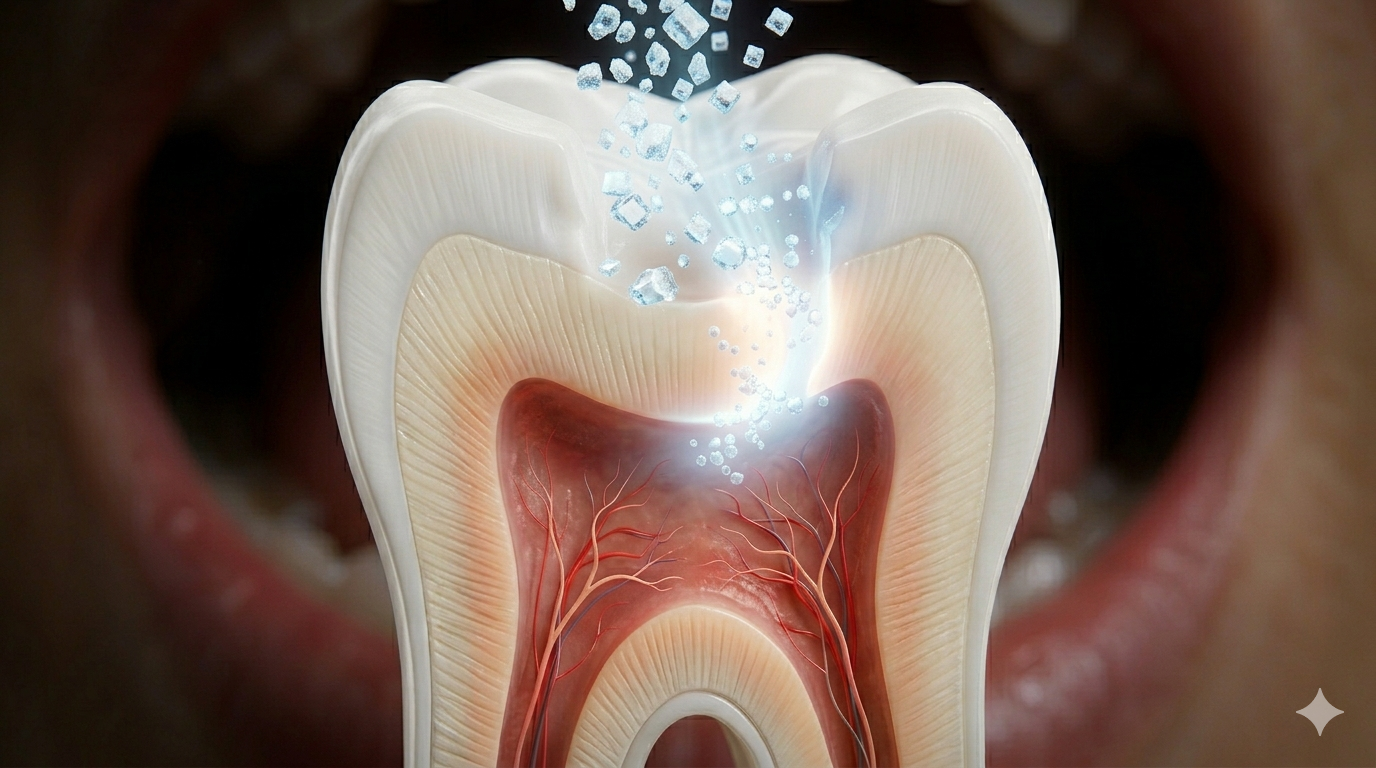
Most people think sugar damages teeth simply by “causing cavities,” but the real process is more complex — and it starts the moment sugar enters your mouth. Every sip of sweetened coffee, bite of dessert, or sugary snack triggers a chain reaction inside your teeth that, over time, can lead to decay.
Understanding this process makes it easier to see why dentists emphasize not just brushing, but also how often you consume sugar.
Step 1: Sugar Enters the Mouth
The process begins as soon as you eat or drink something sugary. Sugar doesn’t directly “eat” your teeth. Instead, it becomes food for the bacteria that naturally live in your mouth.
Your mouth is home to hundreds of types of bacteria — some helpful, some harmful. When sugar is present, harmful bacteria quickly multiply and become more active.
Step 2: Bacteria Produce Acid
As bacteria feed on sugar, they produce acids as a byproduct. These acids are the real problem for your teeth.
The most important harmful bacteria involved in this process are those responsible for dental plaque formation. They thrive in sugary environments and create a sticky layer on your teeth called plaque.
Inside this plaque, acids begin to concentrate directly on the tooth surface.
Step 3: Acid Attacks the Enamel
Tooth enamel is the hard, protective outer layer of your teeth. It is the strongest substance in the human body, but it is still vulnerable to acid.
Each time you consume sugar, acid production begins within minutes. These acids lower the pH level in your mouth, making it more acidic than normal.
When the pH drops below a certain level, enamel starts to lose essential minerals like calcium and phosphate. This process is called demineralization.
At this stage, damage is not visible or painful — but it is already happening at a microscopic level.
Step 4: The Mouth Tries to Repair Itself
Your body is not defenseless. Saliva plays a crucial protective role.
Saliva helps by:
- Neutralizing acids in the mouth
- Washing away food particles
- Reintroducing minerals back into enamel (remineralization)
If sugar intake is occasional and spaced out, saliva gets enough time to repair early damage.
But frequent sugar consumption disrupts this balance.
Step 5: Repeated Sugar Exposure Breaks the Balance
The real danger is not sugar itself, but how often you consume it.
If you eat sugary foods or drink sweet beverages throughout the day, your teeth remain in a constant acid attack cycle. Instead of recovering, enamel stays in a repeated state of demineralization.
Over time, this weakens the enamel layer and creates tiny holes or weakened spots.
This is the beginning stage of dental caries (tooth decay).
Step 6: Cavities Begin to Form
Once enamel weakens significantly, bacteria and acid penetrate deeper into the tooth structure.
The damage moves from enamel to the dentin layer underneath, which is softer and more sensitive. At this point, you may start noticing:
- Sensitivity to cold or sweet foods
- Mild discomfort when chewing
- Visible dark spots or holes in the tooth
If untreated, the decay can reach the inner pulp, leading to pain and infection.
Why Frequency Matters More Than Quantity
One of the most important things to understand is that frequency of sugar exposure is more harmful than the amount consumed at once.
For example:
- Eating dessert once with a meal is less harmful
- Sipping a sugary drink slowly over hours is more damaging
Each sugar exposure triggers a new acid attack cycle. So frequent snacking or sipping gives your teeth no recovery time.
The Role of Oral Hygiene
Brushing and flossing help disrupt this process by removing plaque and reducing bacteria levels.
However, timing matters. Brushing immediately after consuming acidic or sugary foods can sometimes be harsh on softened enamel. Dentists often recommend waiting a short period before brushing to allow saliva to begin neutralizing acids.
Every time you eat sugar, a hidden chemical process begins inside your mouth. Bacteria feed on sugar, produce acid, and slowly weaken your enamel. Over time, repeated exposure leads to cavities.
The good news is that this process is preventable. Reducing frequent sugar intake, maintaining good oral hygiene, and allowing your saliva time to repair enamel can significantly protect your teeth.
Sugar doesn’t damage teeth instantly — but the repeated cycle of acid attacks does. Understanding this helps you make smarter choices for a healthier, stronger smile.